
What is IUI treatment?
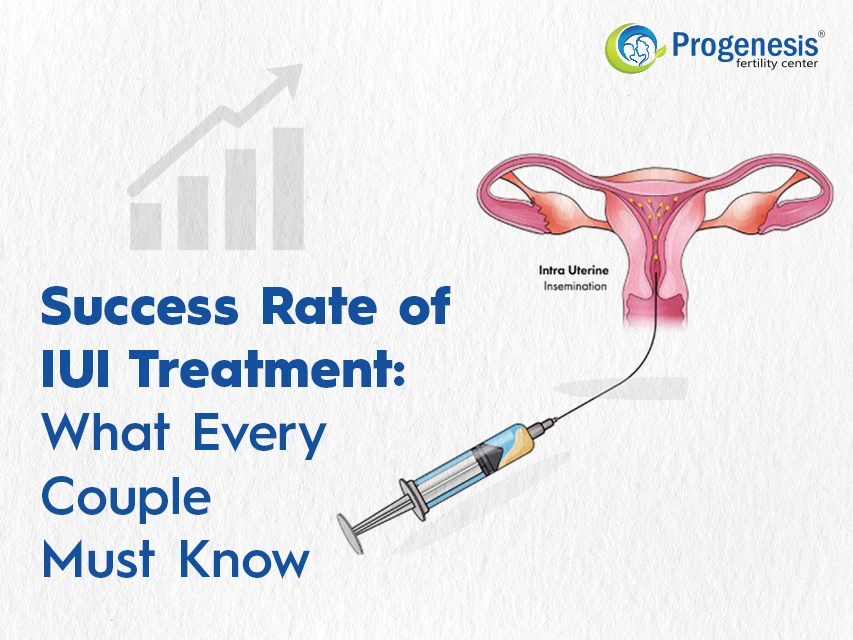
Intrauterine insemination (IUI) is a common fertility treatment that involves transferring sperm directly into a woman's uterus at the time of ovulation to increase the chances of fertilisation. This minimally invasive process is less expensive and simpler than in vitro fertilisation (IVF).
When is IUI used?
IUI is commonly advised for couples experiencing infertility due to minor male factor conces, unexplained infertility, or cervical abnormalities. Many couples can boost their odds of conception and take a vital step towards establishing or extending their families by following personalized IUI treatment regimens.
Who is a good candidate for IUI?
The following candidates can benefit from IUI:
- Women with cervical mucus complications that prevent sperm from reaching the egg and fertilising it
- Undiagnosed infertility patients
- Women with irregular ovulation
- Couples experiencing sexual problems during intercourse, such as erectile dysfunction
- Women allergic to sperm
- Women with mild or moderate endometriosis
- Couples who have minor male infertility due to low sperm count or poor sperm motility.
- Women who want to use a donor's sperm rather than their partner's
Also Read: IUI failure? - Everything you need to know
Who is not ideal for IUI?
It is critical to keep in mind that IUI is not a cheaper or less invasive alteative to IVF. If you have a serious reproductive issue, it is unlikely to work for you.
If you have blocked fallopian tubes, severe endometriosis, low-quality eggs, a low number of eggs (low ovarian reserve), or severe male factor infertility, IUI is not for you. IUI is also not a good option for you if you are in your late 30s or beyond 40. As women age, the number of accessible eggs decreases and so does the likelihood of success with IUI.
IUI procedure overview
1. Ovulation Induction.
The first stage of IUI is the preparation for artificial insemination. Your fertility specialist will recommend that you monitor your body and use at-home ovulation prediction tests to determine the exact day and hour of your ovulation. At-home ovulation prediction tests detect luteinizing hormone to determine the timing of ovulation. The test findings will be used to select a date for artificial insemination. Human chorionic gonadotropin (hCG) injections may also be used in conjunction with other reproductive medicines to facilitate the release of a mature egg if necessary.
2. Sperm Sample Preparation
On your scheduled IUI date, your selected donor or spouse will generate a new sperm sample, which will be processed in the lab for insemination. If necessary, your partner's sperm can be extracted via a less invasive surgical procedure. Later, the sperm are washed. This method concentrates healthy sperm, which are then used for insemination.
3. Artificial insemination.
Using the already prepared sperm, your doctor will inject them directly into your womb or uterus with a syringe having a semi-flexible round tip. If your IUI cycle is successful, your egg will be fertilised and implanted in your uterine lining.
4. Pregnancy test
You will take an at-home pregnancy test approximately two weeks following IUI. If the procedure was successful, your test results will be positive; if it was not, your doctor will prescribe appropriate future measures for you. You may even undergo another round of IUI before progressing to more intensive reproductive treatments such as IVF.
Also Read: When is IUI suggested as the first line of treatment?
Success rates and expectations
When we talk about the IUI procedure success rate, we usually mean that the chances of getting pregnant after a single IUI cycle are between 10 and 20% for younger women. However, knowing the cumulative success rate throughout numerous cycles is typically more important for patients. Here are the cumulative success rates based on the number of cycles conducted:
1 cycle: approximately 10-20% success.
2 cycles: approximately 18-34% success.
3 cycles approximately 25-45% success.
6 cycles: approximately 50-60% success.
Most clinics recommend three to six cycles before pursuing more invasive treatments such as IVF.
Factors affecting IUI success
Age of the woman:
- Women under 35 have greater success rates with IUI, often 15-18%.
- Women aged 35 to 40 have success rates closer to 10-15%
- Women above 40 may have lower rates due to deteriorating egg quality.
Fertility issues:
- IUI is most effective for women who have healthy fallopian tubes and minimal ovulation difficulties.
- Couples suffering from unexplained infertility or mild male factor infertility frequently achieve the highest success rates.
Sperm quality:
- The quality and quantity of sperm are crucial factors in IUI success.
- Higher sperm motility and concentration can increase the odds of fertilisation.
The number of cycles:
- Often, numerous cycles of IUI are required for a healthy pregnancy.
- Couples can expect higher cumulative success rates after 4-6 rounds of IUI.
Also Read: 10 Expert Tips for a Successful IUI: Preparation & Aftercare
After IUI: what to expect
Following the IUI procedure, the next two weeks might be filled with worry and anticipation. Here's what to expect throughout this period:
Immediate aftercare
Post-procedure rest: Following the insemination, you will be recommended to rest for 10-15 minutes before retuing home. Some women suffer slight cramps or spotting, but this usually passes quickly.
Daily routine: You can resume typical activities such as work or light exercise on the same day, unless your doctor advises otherwise. For a few days, avoid high-intensity physical activities such as heavy lifting or intense exercise.
Medication instructions: If you've been prescribed progesterone supplements or other fertility medications, make sure to take them exactly as prescribed to help with the luteal phase and implantation.
The two-week wait
Symptoms to monitor: During the two-week wait, some women may experience early pregnancy symptoms such as breast tendeess, bloating, mild cramps, or exhaustion. However, these symptoms can also be caused by fertility medicines, so don't rely only on them.
Emotional considerations: The wait can be emotionally taxing. Many couples endure anxiety or stress, wondering if the treatment was effective. It can be beneficial to keep active, practice relaxation techniques, or join a support group during this period.
When to take a pregnancy test: You should wait at least 18-20 days following the IUI procedure to take a pregnancy test. Testing too early can lead to misleading results because the developing embryo may not release enough pregnancy hormone Beta HCG, causing false negatives.
Also Read: Causes of IUI Failure and Chances of Successful Pregnancy
Risks and side effects
Overall, IUI is a relatively safe treatment. The primary risk is that you may have multiple pregnancies (twins, triplets, or more), which poses some health risks to both the mother and the infants. Multiple babies are more likely to be born prematurely, underweight, or die before or after birth.
Your risk of multiple pregnancy is determined by the number of follicles (and thus eggs) that mature. This will be influenced by whether you are using fertility medicines. If you are on fertility drugs, it is critical that you have scans to determine the number of follicles forming; if there are too many, treatment should be discontinued. Your fertility clinic should go over this in details with you.