
Understanding PCOS and Its Impact
Polycystic ovary syndrome, or PCOS, is a medical condition causi.ng hormonal imbalance that occurs during the reproductive years in a female. If you have PCOS, you may miss your periods or may experience long-lasting ones. The hormone androgen is in excess in your body with this disorder.
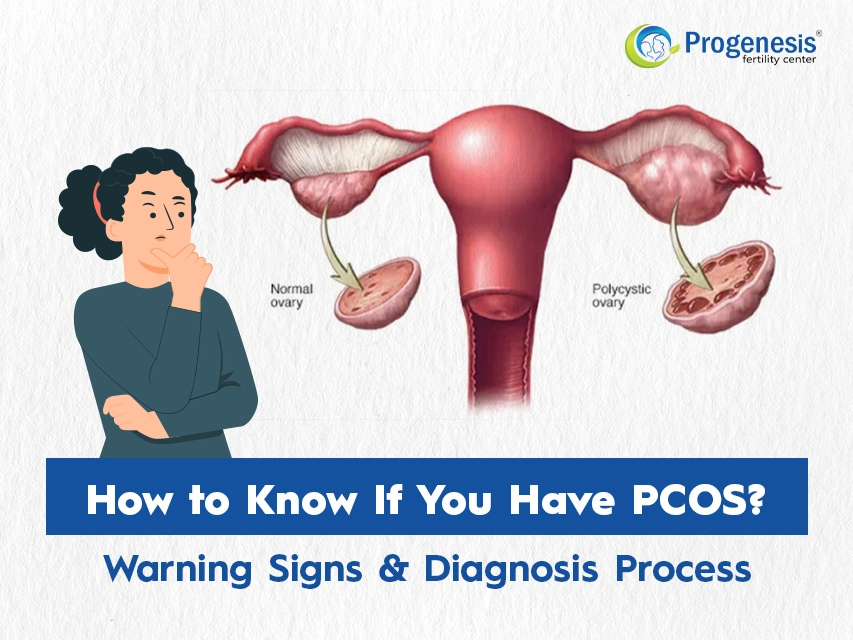
PCOS causes numerous tiny fluid sacs to form along the ovary's outer edge. These are known as cysts. The small, fluid-filled cysts contain immature eggs. These are called follicles. The follicles do not routinely release eggs, which leads to problems with conception among other issues. Let's learn more about this condition in detail.
Common Waing Signs of PCOS

Common waing signs of Polycystic Ovary Syndrome (PCOS) include:
- Irregular or missing periods
- Extreme hair growth (hirsutism)
- Acne
- Weight gain
- Skin changes, such as darkening or thickness in specific areas
- Difficulty becoming pregnant
- Thinning or loss of hair
- Mood swings
Also Read: Best age to Conceive With PCOS | Get pregnant with PCOS
Diagnostic Criteria for PCOS
Polycystic Ovary Syndrome (PCOS) is normally diagnosed when at least two of the following three criteria are met:
- Irregular or missing periods (oligo- or anovulation)
- Symptoms or blood test results that indicate high androgen levels (hyperandrogenism)
- Polycystic ovaries on ultrasonography
Medical Evaluation and Tests
These are the medical evaluations and tests done for PCOS:
Review of Symptoms: A doctor will review your symptoms, including menstrual cycle, irregular periods, excess hair growth, acne, weight gain, and family history of PCOS or similar diseases.
Physical Examination: Physical examinations will include screening for excess hair growth (hirsutism), acne, and skin abnormalities, as well as a pelvic exam to evaluate reproductive organs.
Blood Pressure, Glucose Tolerance, and Lipid Screening: Blood pressure, glucose tolerance, cholesterol, and triglyceride levels should all be checked on a regular basis.
Screening for Depression and Anxiety: It is recommended due to the link between PCOS and mental health disorders.
Blood tests: Your doctor will draw a little sample of blood from a vein in your arm. Lab tests will evaluate the levels of these hormones:
- Follicle-stimulating hormone (FSH): It influences the ability to become pregnant. If you have PCOS, your level may be lower than or equal to normal.
- Luteinizing hormone (LH): It promotes ovulation and could be higher than usual.
- Testosterone: It is a sex hormone that is increased in women with PCOS.
- Estrogens: These are a group of hormones that help women get their periods. If you have PCOS, your levels may be normal or elevated.
- Your sex hormone binding globulin (SHBG): The levels of SHBG may be below normal.
- Androstenedione: A sex hormone called androstenedione may be elevated above normal levels.
Blood Glucose and Cholesterol Test: If you have PCOS, you may be given a blood glucose and cholesterol test. Doctors frequently do these tests to assess your overall health and likelihood of having other conditions
Also Read: PCOS - Managing and Treating Irregular Periods
Importance of Early Diagnosis
Early detection of Polycystic Ovary Syndrome (PCOS) is critical for successful treatment and prevention of long-term health consequences. Early diagnosis of PCOS allows for timely measures, such as:
- Lifestyle changes and medical treatments.
- Control over symptoms
- Minimization of the risk of developing serious illnesses such as type 2 diabetes and heart disease.
- Prevention of infertility to allow natural conception.
Conclusion
The exact cause of PCOS remains unknown. Early diagnosis and treatment, combined with weight loss, may reduce the risk of long-term consequences like type 2 diabetes, heart disease and infertility. If you are suffering from PCOS, then follow the guidance provided by your doctor to keep things under control.
Also Read: 5 Myths about Polycystic Ovary Syndrome (PCOS)
FAQs on PCOS
1. How to know if you have PCOS or PCOD?
PCOS is a complex metabolic condition that includes PCOD, androgen excess, and insulin resistance.