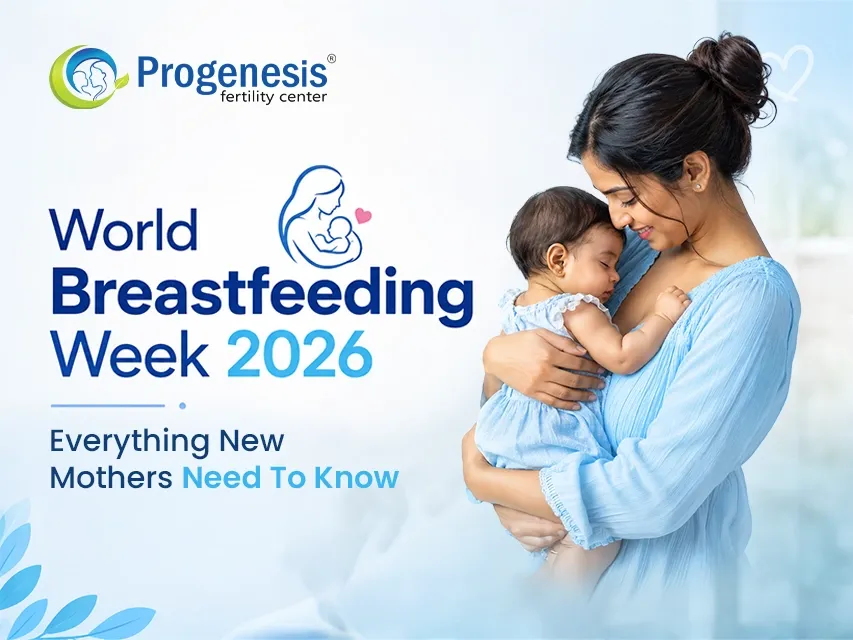
World Breastfeeding Week serves as a reminder that breastfeeding mothers require support, attention, and care from all members of society including us.
Contrary to being one of the most natural and beneficial activities for both mother and child, breastfeeding is sometimes accompanied with misinformation, cultural obstacles, and a lack of support. Many new parents struggle to initiate and maintain breastfeeding due to a variety of circumstances, including poor guidance and incorrect assumptions, as well as cultural stigma and inadequate workplace arrangements. To bridge this gap, World Breastfeeding Week is held annually from August 1st to August 7th, to raise awareness towards these conces and encourage efforts to establish an atmosphere in which breastfeeding is accepted and normalised.
This blog delves into why the week is important, how the 2026 theme promotes fair support systems, and what such support should look like in practice. But first, let's take a look at how World Breastfeeding Day started.
History and Importance of World Breastfeeding Week
World Breastfeeding Week was established in 1992 by the World Alliance for Breastfeeding Action (WABA), in partnership with the World Health Organization (WHO) and UNICEF. The goal was to raise awareness about the benefits of breastfeeding and to persuade communities and health-care institutions to provide a more supportive environment for mothers. The first week of August was chosen to commemorate the anniversary of the 1990 Innocenti Declaration, a global commitment by govements and inteational organisations to protect and promote breastfeeding.
Since then, World Breastfeeding Week has expanded into a global movement celebrated in over 120 countries. Each year, the campaign focuses on distinct subjects that emphasise contemporary breastfeeding issues and objectives. These topics help to focus attention on the practical initiatives needed to support mothers, such as improved hospital policy and increased job rights. At its core, the week serves as a reminder that breastfeeding is a shared obligation that requires active participation from all segments of society.
World Breastfeeding Week 2026 Theme
The topic for World Breastfeeding Week 2026 is "Breastfeeding for a Sustainable Start in Life: Strengthen What Works," which focuses on strengthening policies, programs, and support systems that have proven helpful in assisting mothers to effectively breastfeed. It emphasises the need to build on previous gains by improving healthcare support, employment policies, community activities, and family involvement. The subject also acknowledges nursing as a critical contributor to improved mother and child health, as well as supporting broader aims like increased nutrition.
The phrase "Prioritise Breastfeeding" is a call to action for govements, companies, and health-care providers to prioritise breastfeeding. "Create Sustainable Support Systems" emphasises the necessity of creating surroundings that will continue to support moms and newbos over time. This may include well-planned mateity leave, adequate lactation facilities in workplaces, and ongoing training for healthcare personnel to help new mothers.
Also Read: Comprehensive IVF Treatment Guide
Breastfeeding Tips That Every New Mother Should Know
Breastfeeding might be difficult at first. Although it is a natural process, it may take some time to feel comfortable and consistent. Knowing a few practical strategies can make the first few weeks go more smoothly.
| Tip | What to Do / Expect |
|---|---|
| Begin as early as possible | Feeding during the first hour after birth can boost milk production and promote early bonding. This period is known as the 'golden hour' and can help get breastfeeding off to a good start. |
| Eat on demand, not by the clock | Newbos may eat often, once every two to three hours or more. Allowing the baby to feed when hungry increases supply and keeps the baby satisfied. |
| Check for a good latch | A good latch relieves discomfort and ensures that the baby feeds properly. The baby's lips should cover more of the lower half of the areola, not simply the nipple, and the chin should rest on the breast. |
| Expect some discomfort but no pain | It is natural to feel sore at first. However, soreness that persists throughout the feed may indicate a problem with placement or latch. Early intervention can help avert future issues. |
| Look for evidence of effective feeding | Wet nappies, regular stools, and consistent weight gain are all encouraging signals that the baby is eating healthily. A peaceful, pleased baby after feeding, as well as audible swallowing during feeds, are also reassuring markers. |
Also Read: Understanding Low AMH and Its Impact on Female Fertility
Advantages of Breastfeeding
Breastfeeding provides a variety of physical, mental, and long-term health benefits to both the baby and mother. The benefits include:
Benefits for the Baby
| Key Benefit | Description |
|---|---|
| Optimal Nutrition | Breast milk contains the ideal balance of proteins, lipids, vitamins, and minerals for a baby's development. It responds to the baby's changing demands throughout infancy, providing just what the body needs at each stage. |
| Cognitive Development | Breast milk contains key nutrients, such as vital fatty acids, which have been linked to increased cognitive development. According to studies, breastfed kids may develop stronger language and motor skills as they mature. |
| Immune Protection | Breast milk includes antibodies that protect babies from illnesses like diarrhoea, pneumonia, and ear infections. These antibodies also help to lessen the severity of infections that do arise. |
| Reduced Risk of Long-term Health Problems | Breastfeeding reduces the risk of childhood obesity, type 2 diabetes, asthma, and some kinds of childhood leukaemia. These protective benefits can last throughout adolescence and adulthood. |
| Easy Digestion and Absorption | Compared to formula, breast milk is easier on a baby's digestive tract. It lowers the risk of constipation, gas, and colic, making feeding more comfortable and consistent. |
Benefits for the Mother
| Key Benefit | Description |
|---|---|
| Promotes Physical Recovery Post-Childbirth | Breastfeeding stimulates the production of oxytocin, a hormone that helps the uterus contract and return to normal size. This procedure also helps to minimise postnatal haemorrhage. |
| Long-Term Health Protection | Breastfeeding reduces the chance of developing breast and ovarian cancers. There is additional evidence that longer nursing periods may reduce the risk of high blood pressure, heart disease, and type 2 diabetes. |
| Natural Weight Management | Breast milk production requires extra energy, which may help some moms reduce pregnancy weight slowly and safely over time. |
| Encourages Emotional Bonding | Physical intimacy during breastfeeding fosters a strong emotional tie between mother and child. This bonding may also aid in stress reduction and the prevention of postpartum depression. |
These benefits underline the importance of breastfeeding not only as a feeding strategy, but also as an essential component of early childhood care.
Conclusion
World Breastfeeding Week serves as a reminder that breastfeeding is not a mother's job alone; it requires support, attention, and care from all members of society. This jouey frequently raises questions, uncertainties, or the desire for reassurance in pregnant women or those who are already breastfeeding. It is important to get advice from specialists who can help make your breastfeeding experience less stressful and more comfortable, particularly in the early stages.