
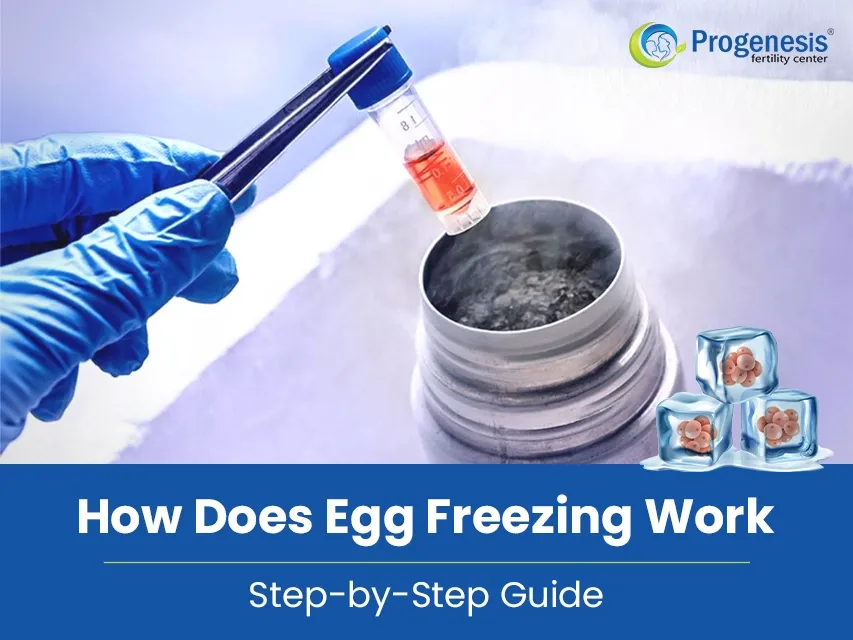
Egg freezing, also known as oocyte cryopreservation, is an ART. Delaying pregnancy by freezing your eggs has become more widespread than it once was.
Women have the healthiest eggs when they are 25 to 30 years old. After the age of 30, the quality of the eggs begins to decline. However, with egg freezing as a possibility, you can fulfill additional goals before becoming mothers.
Many women choose egg freezing not only for medical reasons, but also to balance their personal, professional, and family goals. This article will help you understand what the procedure is about and who should consider it.
What is egg freezing?
Egg freezing is a fertility preservation technique in which eggs are extracted from the ovaries, frozen, and kept for later use. It is technically called oocyte cryopreservation. The goal is to save healthy eggs when fertility potential is high so they can be used later when natural conception becomes challenging.
Many women choose to freeze their eggs for personal reasons. Some people postpone having children to focus on their careers, schooling, or financial stability. Others may not have found the ideal spouse yet, but would like to keep the possibility of having biological children open. So let's find out how egg freezing is done.
Step-by-step Egg Freezing Process
Initial Consultation and Ovarian Reserve Testing
The initial stage in the egg freezing process is to have your medical history evaluated. Common tests include blood work for hormones like AMH (Anti-Müllerian Hormone) to assess your ovarian reserve and an ultrasound to count antral follicles. These findings help determine how well your ovaries respond to stimulation.
Hormonal Stimulation and Monitoring
Following the initial examinations, you begin a series of hormonal injections. These medications induce the ovaries to generate several eggs rather than a single egg that develops normally each month. Regular ultrasound scans and blood tests are used to monitor follicle growth and ensure that the ovaries are reacting appropriately. This period normally lasts 10 to 12 days.
Egg Retrieval Procedure
When the follicles achieve the appropriate size, a trigger injection is administered. Egg retrieval occurs 34-36 hours later. The surgery is brief, and the patient is anaesthetised. The eggs are harvested using a tiny needle and an ultrasound device. Most women return home the same day, and the recovery is also swift.
Freezing technique (vitrification)
Following retrieval, mature eggs are carefully frozen using a procedure known as vitrification. This method keeps ice crystals from forming, which could harm the cell structure. The eggs are then kept in liquid nitrogen chambers at extremely low temperatures until needed.
Also Read: Egg freezing vs Embryo freezing – Which is better?
Who Should Consider Freezing Their Eggs?
Age and Fertility Preservation
Age is the most important factor. Female fertility drops with time as the quantity and quality of eggs decrease. The egg freezing age limit is not set medically, however success rates are significantly greater when the treatment is performed before the age of 35. Women in their late 20s and early 30s benefit the most because their eggs are still of high quality.
Younger women may also consider egg freezing if they have opted to postpone pregnancy past their peak reproductive years. Doctors frequently advise against waiting until the late 30s because the ovarian reserve is already significantly reduced.
Medical and Lifestyle Reasons
Some women have health issues that directly disrupt their fertility, such as endometriosis, premature ovarian insufficiency, or PCOD. Cancer patients who require chemotherapy or radiation may also consider conserving eggs before treatment, as these treatments can negatively impact ovarian function.
Lifestyle factors also have an important role. Women who work in high-stress occupations, serve in the military, or travel frequently may benefit from having saved eggs. Simply said, egg freezing allows you to gain time while eliminating the unpredictability that biology frequently introduces.
Also Read: Did you know these facts before freezing your eggs?
Risks and Side Effects of Egg Freezing
Medicine Reactions
Hormonal injections might cause brief side effects like mood swings, bloating, or minor discomfort. In rare situations, women may develop ovarian hyperstimulation syndrome (OHSS), which causes enlarged and painful ovaries. With adequate monitoring, risks can be avoided.
Procedure-Related Risk
The retrieval operation is relatively safe, with only minor risks of blood or infection. Such problems are uncommon and can be properly addressed with prompt medical attention. Most women just have mild cramping or spotting for a day or two.
Egg Freezing Success Rate and Factors Influencing It
Age At The Time Of Freezing
The younger you are at the time of egg freezing, the greater the potential is for success in the future. Eggs frozen before 35 are more likely to result in a safe pregnancy than eggs frozen at 38 or 40. The egg freezing age limit can potentially be extended into the early 40s, but results drop substantially after the mid-30s.
Number of Eggs Recovered
Success is also determined by the number of eggs collected and kept. A higher number increases the likelihood of producing viable embryos during IVF later. Doctors typically recommend collecting 15-20 mature eggs to ensure a decent likelihood of conception.
It is crucial to note that freezing eggs does not ensure conception, but it does boost the chances when compared to trying naturally at a later age.
Conclusion
Egg freezing is still a relatively unknown topic in India. However, it is an appealing choice for women to guard their fertility and make their own decisions. While it doesn't come without risks or limitations, it is a considerable option for those looking to secure their reproductive future.